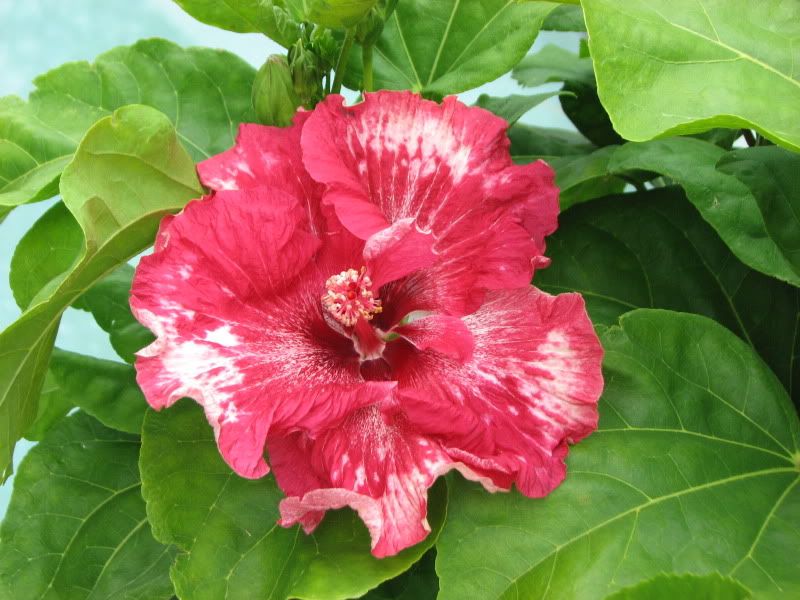
One hibiscus hybrid I grew from seed, the "Red White Splash", doesn't want to root very well. The leaves quickly wither down and fall off within a few days. I'm experimenting to see if this one will root, so today I setup a new cutting. The cutting is an all green stem tip about 3-4" long. I removed all the lower leaves except the top two. I dipped the end into Rootone and placed the cutting into a mix of Miracle Gro Seed Starting and perlite. I made sure there were 3 nodes buried in the Miracle Gro mix. I covered the cutting with an empty 2 L bottle with the bottom cut out. Just keep the cap screwed in to lock in moisture. The idea is to keep humidity in to prevent moisture loss from the leaves, hence the name Greenhouse Experiment in the title. Also I don't want to cook the plants either so I have to keep the covered cuttings out of direct sunlight.
Here is day one, fresh green stem tip cutting of "Red White Splash" hibiscus hybrid.
This upside down 2 L bottle creates the greenhouse environment.
In 2009 I learned there is actually an international society geared towards hibiscus hybridizing. They have hibiscus of the year voting and all that stuff too. Some of the hybrids that are generated look amazing, nothing like you can find in Home Depot or Lowes. In 2009 second place was awarded to Gator Magic, a Florida hybrid created by Bob Carran. I had to have it so I purchased it online. Here's a photo of my first bloom...
As you can see this is a plant worth having, only problem is it's hard to find now. I searched and came up with nothing, even eBay didn't have it. My option now is to clone this plant myself using propagation. The plant itself was neglected for a long time in a pot, which most of the soil leaked out. I'm surprised it's still alive. Nevertheless, I lucked out and it's still going. I pruned and repotted in fresh new potting soil. It has a bud growing on the top, so I didn't want to cut that stem. I found a small 3-4" tip cutting that will work though. I am using the water method to root this cutting since it's mostly tender green stem. Hopefully it works, if it doesn't, I still have a nice stem cutting waiting for me after the bud flowers. :)
Today I took some cuttings off some of the hibiscus I grew from seed in 2009. I'm using a gallon pot with side holes on the bottom. Fill the pot 2/3 full of moist perlite and sit inside a saucer of water. The water level in the saucer should always submerge the holes in the gallon pot. Because of the wicking properties of perlite, this method should keep the cuttings moist and also provide plenty of oxygen. I put the cuttings in a partial sunny area that doesn't get direct afternoon sunlight. In 4-6 weeks I should have duplicate mini copies of the plants below...
3 cuttings of Rosalind x Dragons Breath (image below)
2 cuttings of Sweet Bippee x Dragons Breath (image below)
Cutting in Perlite Experiment - Day 1
UPDATE 4 weeks later: None of these cuttings survived unfortunately. It was my first attempt and I think I took the cuttings from an already unhealthy plant, plus the stems were from last years growth I think. These hibiscus plants were neglected for so long but now repotted and bouncing back. Another thing I didn't do is cover the cuttings hold moisture in the leaves. So this experiment failed but I'll try again. :)
After taking a break from extreme gardening for awhile, and with some free time on my hands, I've decided to revisit the world of plant propagation and development again. In 2009, I started Tropical Hibiscus, Datura metel (purple trumpet), and Plumeria from seed. After successful germination and overwintering, these 6 year old plants are still alive today. Most still in containers as well.
The Datura had seeded itself and was actually growing outside the container. So with a little luck I carefully took it out and repotted it. It's dropping some leaves, but so far hanging on.
I have 3 Plumerias now, neither have bloomed sadly. Although they lacked fertilizer for several years, they are heavy feeders. In the picture there is one large and two smaller plumerias that just need bigger pots. All three plumerias are 6 year old plants, so you can see how much space for roots makes a huge difference in overall plant size and growth.
A few years ago I purchased a Purple Passionflower vine (Passiflora incarnate). It's a host plant for the Gulf Frit butterfly. The wasps have controlled the caterpillar population this year, therefore allowing a lot of lush green growth and it's even bloomed several times this year.
The Hibiscus I'll take pictures later when they are in better shape. The containers they were have leaked soil, so they need to be repotted. With a little TLC they will bounce back and should have blooms by the end of the year.
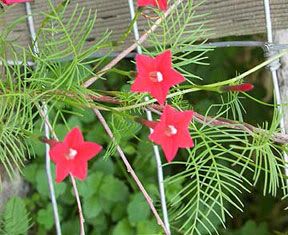
One of the wild vines we have in our backyard is a Cypress Vine, also known as the Hummingbird Vine. It has taken over a corner of our backyard and spreading fast all over the large Sago palm tree. This vigoriously growing vine has fernlike foilage with small bright red trumpets that bloom for 3-4 months in the summer and fall.
This plant has attracted our first hummingbird in our area. It visits briefly about once a day checking out the red flowers on this vine. Now we put a new hummingbird feeder outside on a shepherds hook. They haven't found the feeder yet but it's in the right location close to the cypress vine. We'll see how well the hummingbird feeder works out by the end of the year.
In this post I will briefly update the birds we've seen in our backyard recently.
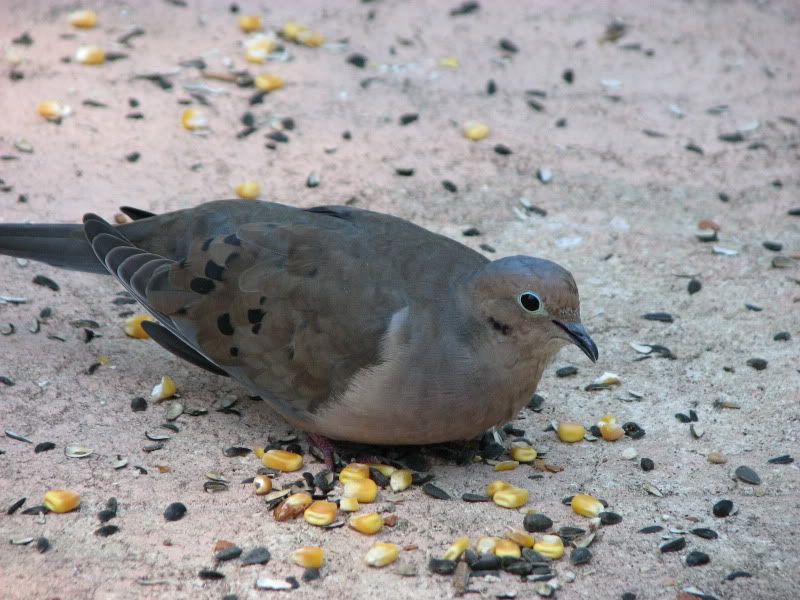
First I'll start with the year-round residents who seem to have found a local home here. The most common bird around our feeders are the Mourning Doves. At least 2-3 visit everyday, while some days I see up to 8 or 9 doves fighting over a spot to eat. 
The Tufted Titmice are still here, usually in small groups of 2 or 3. I can always tell when a hawk is in the area since these titmice are very vocal to alert others of a possible threat.
The male and female pair of Cardinals are still here too. They usually travel together and occassionally the male will feed the female.
My favorites are a couple of Black-capped Chickadees that seem to travel with the Tufted Titmice often. These small chickadees are the most adorable birds ever, and their calls are even more adorable.
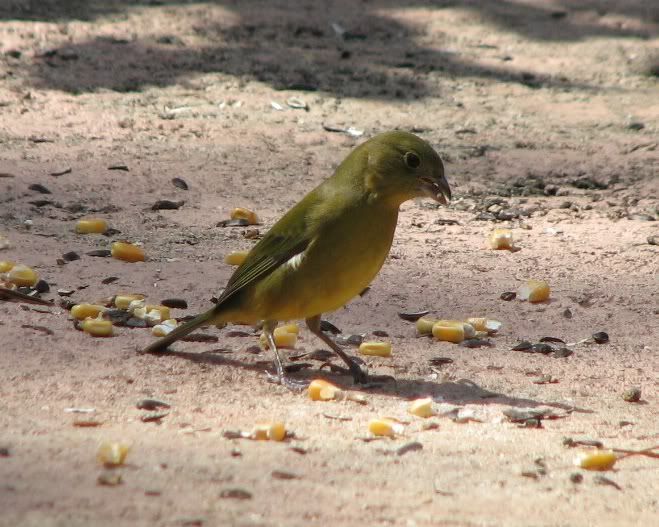
And finially here's a female Painted Bunting that recently showed up since the first cold snap that hit our area last week. I remember seeing these birds last fall/winter, so I'm pretty sure they are migrating from the north.
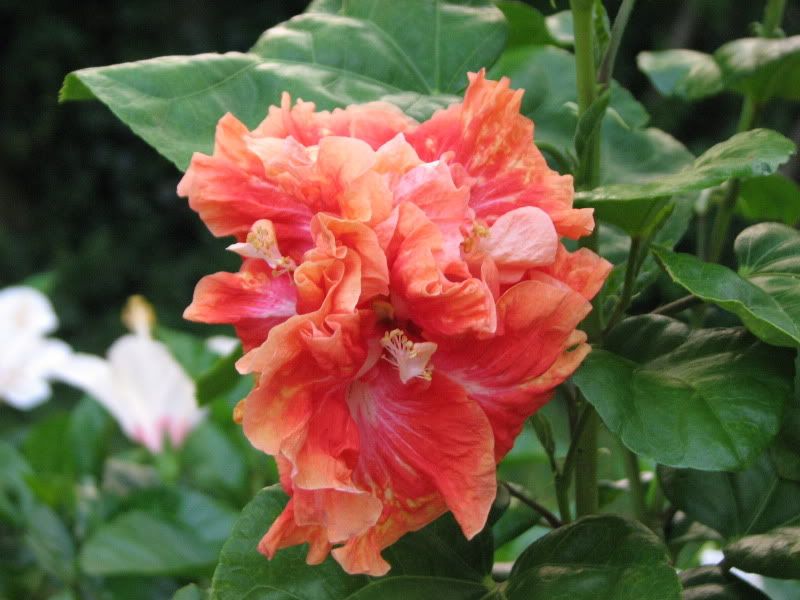
Another first bloom, and this is now my 3rd hibiscus hybrid bloom from seed.
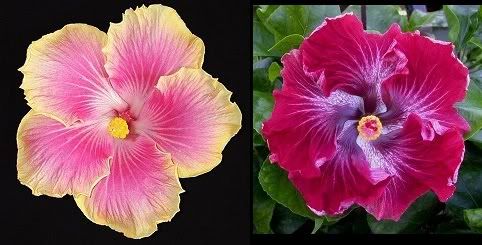
The top side-by-side pictures show the parent plants of Sweet Bippee (left) and Dragonsbreath (right). 
This one is full of colors. It has a pink/white interior that fades out to orange tips, with a slight yellow speckle on the edges. Here it is!
Today I was rewarded with an impressive first bloom on one of my hibiscus from seed. This plant is over 2 years old and finially blooming. It's another hybrid seed crossing from Australia.
The top side-by-side pictures show the parent plants where the seed came from.
Rosalind (left) and Dragon's Breath (right)
And here's the first new flower :)
The first day of September is welcoming after enduring two of the warmest months of the year. July and August have an average daily high of 92°F in Orlando. Even though it's still very hot and wet for weeks ahead, this day marks the beginning of a seasonal change. It means the beginning of Fall-Autumn on September 23, 2011. As days move on we can expect a slow transition of color and weather.
Gall Midge Treatment Update
Only a couple days after my gall midge treatment and the hibiscus look like they are pest free right now, not even an aphid was found last time I checked. I'm pretty sure it's killing the gall midge larvae too since I've noticed a few more healthy blooms on the white hibiscus.
Upcoming First Blooms
I have 2 more hibiscus plants that are blooming for the first time which means sometime this month I'll have a few new hybrids to show off. These hybrids were grown from seed for the last 2 years.
Also my Becky's Blue/White passion flower is blooming well, another first flower on this one too. I purchased this plant on eBay this year.
Milkweed Bug Control
Another pest this summer is the Milkweed bug. Once established, they do alot of cosmetic damage to your milkweed. They don't actually kill the plant as milkweed just grows back when it's cut down, but the Monarchs need healthy leaves in order to grow properly. Getting rid of an established milkweed bug colony means cutting back my plants, throwing away the stems with the bugs still on the cuttings. The cuttings go into a trashbag that is sealed leaving the bugs trapped. I absolutely don't use pesticides on my milkweed plants as I don't want to harm the baby caterpillars or poison the leaves. It doesn't take long for milkweed to grow back, in fact they actually look better when you do occassionally cut them back.