Showing posts with label insects. Show all posts

Final Update - Polyphemus Moth hatched

Happy New Year's Eve! Exactly 7 weeks have passed since the cocoon was made, and finially emerged a Polyphemus Moth. Beautiful design on the wings, with streaks of pink and very distinct eyes. Truely a sight to admire. Though I'm glad I eventually only raised one caterpillar since the moth is rather big, but it was a very interesting experience. All together it took just under 3 months from egg to moth! I released it the following day on January 1st so it can continue it's life cycle.


Update - Polyphemus Moth caterpillars

It's been about 6-7 weeks since those Polyphemus moth caterpillars hatched from their eggs. They've been eating alot and growing fast everyday. I started with over 20 larvae, but since I couldn't keep up with the amount of leaves they were all eating, I decided to release several outside. Now I'm raising just 1 single caterpillar and it has finially formed a cocoon!


Update - Polyphemus Moth caterpillars

It's been 18 days since the larvae hatched out of those strange eggs
(see previous post here)

I originally had about 25 larvae, but they were eating so much that I had to keep refilling the oak leaves in the jar. So I released several and now I'm raising 4 caterpillars. I've read they get about 2 inches long before they start to form cocoons. Right now they are a little over an inch long. Will update again in a couple weeks!


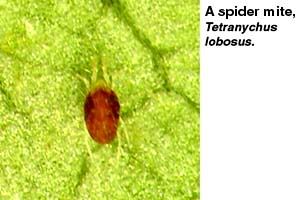
Spider Mite control...enough is enough

Spider mites are a warm weather problem for several hibiscus growers. They thrive in hot, sunny, and dry conditions when temperatures are high. The first sign of spider mites is when a leaf or two get yellow mottling mixed in its normal green, then slowly the entire leaf turns bright yellow then falls off. Soon more and more leaves turn yellow and fall off, which can be fatal to your plants. As the spider mites spread, you can see very fine webbing at the tips of the branches with yellow leaves.

I've been battling with spider mites for the last 2-3 weeks. As a safe treatment, it was recommended to spray the underside of leaves with a hard stream of water at least once a week. This washes off the spider mites and breaks their lifecycle. However, this method has been ineffective on our large hibiscus plant, which has lost most of it's leaves due to spider mite damage. One by one, the leaves would yellow and fall off within 24 hours. Amazingly, the hibiscus was still blooming well during this time.

I also tried the use of beneficial insects, the Green Lacewing larvae. I received the eggs in the mail from http://www.arbico-organics.com. When I noticed some of the eggs had hatched inside the container, I sprinkled the eggs and live larvae onto the hibiscus plant. This method will reduce the number of spider mites if applied correctly.

I also researched Miticides that were proven effective. The two name brands I found most popular are Forbid 4F and Floramite SC, both of which kill the adult mites AND the eggs. Forbid 4F seems to be the stronger of the two, since it kills all kinds of mites. Forbid 4F offers knockdown and residual control of mites and whiteflies. The active ingredient in Forbid is spiromesifen. I purchased a 5mL bottle of Forbid 4F on eBay, which makes 8 gallons and is more than enough for a small volume grower.

Compare miticides such as Forbid & Floramite here :
Miticide Chart

Photobucket

Mystery eggs and larvae - Polyphemus Moth

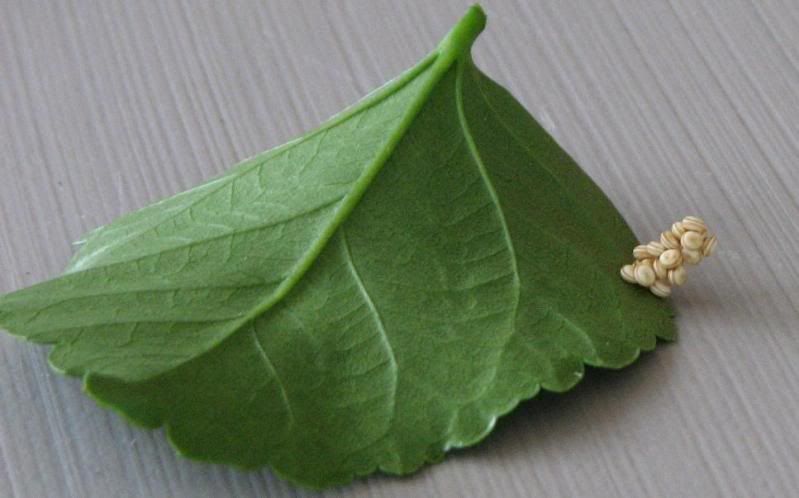
Found some unusual egg capsules under some Hibiscus leaves, so I collected them and put them in a jar to hatch. Below is a picture of the eggs..

Photobucket

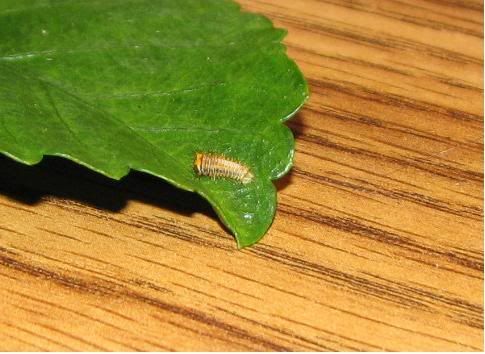
After a few days, the eggs hatched into tiny larvae that looked like caterpillars...

Photobucket

Very hard to identify these larvae, but after some research on Google, I learned the same eggs and same larvae belong to the beautiful Polyphemus Moth. The website below shows more detailed pictures on the lifecycle of this particular moth.

Website on the Polyphemus Moth

I'm feeding the newly hatched larvae oak leaves and there are about 20 babies in a jar right now. Will update as they get grow bigger. =)

Hibiscus Gall Midge and bud drop

Are your hibiscus buds dropping off prematurely? Hibiscus bud drop is a sign that something is wrong. In some cases, it's the hibiscus gall midge. The gall midge is a small fly thats lays its eggs inside flower buds. As the larvae hatches from the egg, it feeds inside the flower bud until it drops to the ground. Once on the ground, the larvae exit the flower bud and enter the soil to pupate. After a couple weeks, an adult gall midge emerges from the soil and the whole cycle starts again.

If you suspect gall midges, it's relatively easy to identify. Look for yellowing flower buds and pick one off the plant for inspection. Carefully open the flower bud and look for tiny worm-like larvae inside. Another trick is to pickup any dropped flower buds and put them in a sealed ziplock bag. After a couple hours, check the sealed bag for small larvae that have exited the buds.

Most spray pesticides are ineffective as they don't come in contact with the larvae. The key to controlling this pest is to treat the plant with a systemic pesticide to kill larvae inside the flower buds and treating the soil around the plant to kill off any larvae that have entered the soil. For a systemic pesticide, I sprayed Bayer 3-in-1 (active ingredient: imidacloprid) on the plant. For soil treatment, I sprinkled Bayer Complete Insect Killer granules. On top of this, I made sure to pick up any dropped flower buds and put them in a sealed ziplock bag so the larvae could not escape into the soil. Be persistant to catch dropped buds to ensure your capturing the larvae. After a week or two, the flower buds will stop falling off and your plant will be midge free.