Let the Spring begin!

In about two more weeks, spring officially begins. And for a majority of February this year, we've had a nice warm trend of weather. I've pruned all the Hibiscus down and wacked the Crape Myrtles back. New growth can be seen on all plants already, so there's little to no casualties from the winter freezes this year.

On February 18th, I started some annual flower seeds in the Burpee Ultimate Growing tray. I sowed 12 cells of Sweet Alyssum "Snow Crystals", 12 cells of Zinnia "Candy Cane Mix", 10 cells of Milkweed, 12 cells of Petunia and 18 cells of Impatiens.
So two weeks later, most have sprouted by now. The Petunia seed must be old based on poor germination rates. The Impatiens has just started to germinate. And the Zinnia and Milkweed have been transplanted into larger 3.5" pots for maturing.

I have 11 pots of Zinnia "Candy Cane Mix" ; 10 pots of Milkweed ; and 12 cells of Alyssum to be transplanted into pots next.

Awaiting consistant warm weather

It has been a slow month in the garden, not much going on. With some hard freezes in December and January, I managed to safely protect my container plants such as Hibiscus, Ornamental Peppers, and Plumeria. It looks like they will be fine. In fact, alot of them still have green leaves. As for outdoor plants in the ground, we'll see how well they recover when I prune them down in March. Sometime in February, I'll be starting some annual flowers from seed so I'll have more content to blog about, but until then, I'm just waiting for the warmer weather.

Ruby-Crowned Kinglet sighting

Here's another winter migration bird, the Ruby-crowned Kinglet, one of the smallest songbirds in North America. Found this one while I was outside refilling the bird feeders. This one is a female because it lacks the ruby crown. Their breeding habitat is in the forests across Canada, Alaska, and western United States. They then migrate to the southern United States and Mexico. While observing this bird I was hearing this unusual wing flicking sound during flight, and apparently this is common with Kinglets. It was attracted to our American Beautyberry plants which now have gorgeous bright purple berry clusters all over them.

Hard Freeze & winter migrating birds

The winter migration is on and we have some company. No it's not my family visiting for the holidays, I'm talking about a small "tournament" of Chipping Sparrows making a buffet out of our fresh bird seed. There's probably about 6 or 7 sparrows in this group I've been seeing almost everyday. Along with the chipping sparrows, we still have the titmice and cardinals.

Florida is experiencing an unusual hard freeze this early in December, which could mean a very cold and damaging winter in the near future. Last night the temps dropped down to 27-29 degrees for a couple hours here. Factor in the wind chill, and they say it feels like 20 degrees outside. BRRRRR! Several plants are still covered with blankets and my container plants are temporarily sitting in the garage. We're suppose to have another hard freeze tonight! That will make 3 freezing nights so far this season and it's only December 14th. I'm hoping we won't have too many garden casualties due to freeze kill. Though I'm sure the garden shops will be very busy in the spring when floridians will have to replace their landscape.

It's been awhile since I've added a photo so here's one I took today of the chipping sparrows. Enjoy! :)

Happy Halloween!

Happy Halloween to everyone! =)

Not much going on in the garden for me so I haven't been posting much. The weather has been extremely dry though, been several weeks since our last good rain. On the positive side, it's been a nice 60 degrees in the evenings so being outdoors at night has been pleasant.

I am starting to notice ALOT of seed pods on flowering plants. I'm collecting seeds from my zinnia's, Asclepias curassavica (tropical milkweed), and Datura metel (double purple devil's trumpet). Interested to check the seed viability next spring when I get ready to plant these varieties again.

This will probably my final post this year on Monarchs as well. I've successfully released 60 Monarch butterflies this year, 35 females and 25 males. I'm most likely done with Monarch raising for the year since it's getting cooler outside, so I'll just start again next spring.

30th Monarch Milestone

Today marks a milestone in my personal monarch butterfly release. I set free a female and male monarch this afternoon and watched them fly gracefully into some tree cover. The male monarch emerged today and was the 30th successful monarch I've raised this year from caterpillar to butterfly. It's been alot of work, but I'm happy with this accomplishment so far. Proud that I can help the Monarch species, especially if they continue to visit our butterfly garden this year.

The local Monarchs are still laying eggs on the milkweed. The weather is still hot and humid, with a few spotty showers in the late afternoons. There's no shortage of milkweed in our yard either, with about 10 healthy plants providing enough food for the amount of caterpillars I'm rearing.

On another non-gardening note, last night I caught a 3 lb. channel catfish off the St. Johns river bank. It's my personal best so far. =)

Photo Journal 8/11/2010

August is typically the hottest month of the year in Florida. You can definitly feel the heat and humidity as soon as you step outside. Here's a few pictures from around the garden.

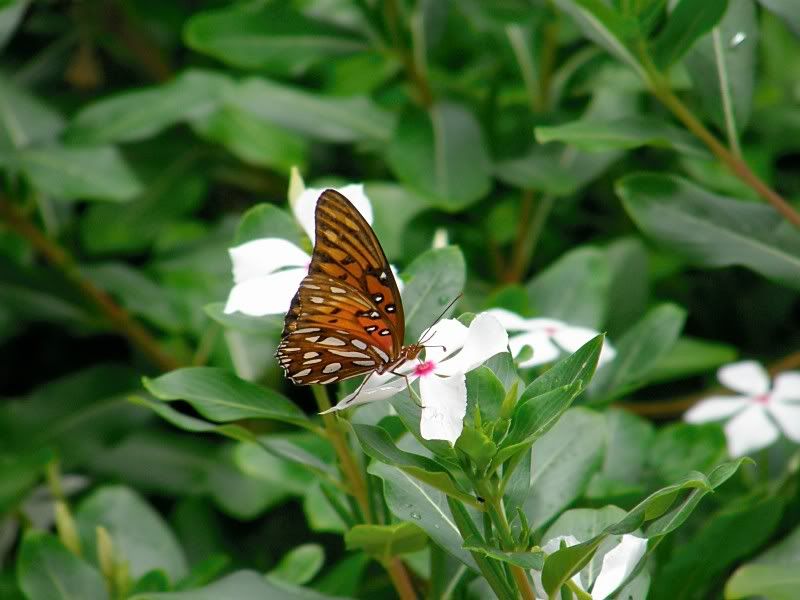
The first picture below is a Passion Flower, passiflora caerulea. This is a host plant for the Gulf Fritillary butterfly (second picture). I have a couple Gulf Frit caterpillars that I'm rearing inside, so I'll have to post another update soon with pictures of them.


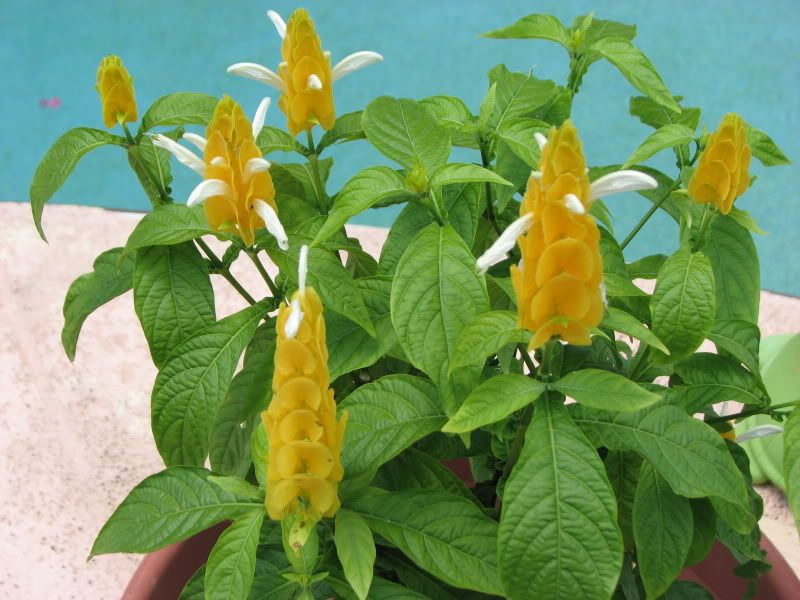
Below is my Golden Shrimp plant, Pachystachys lutea.


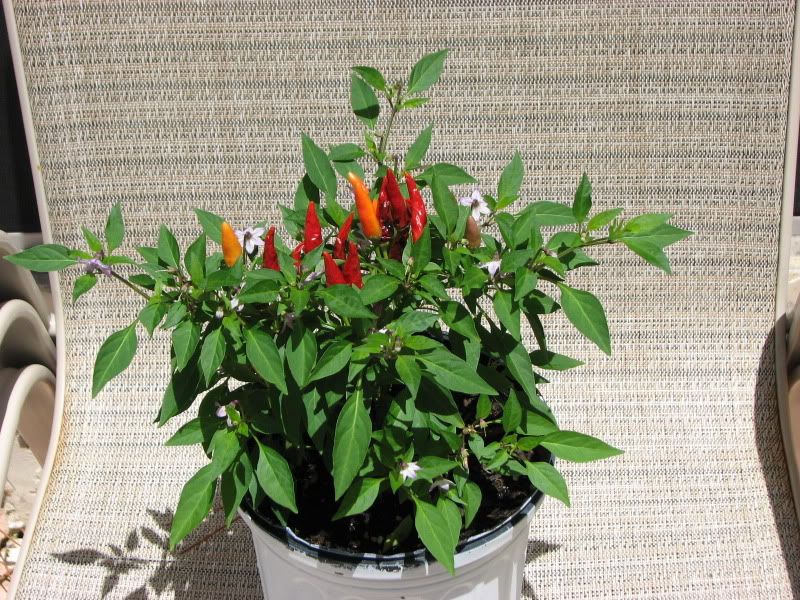
I started this Ornamental Pepper from seed in March 2010. It's very easy to grow and it's neat watching the little peppers change colors as they mature.


And finially, here's an updated photo of my Plumeria I started from seed in August 2009. It hasn't bloomed yet, and probably won't for another year or two. It take 2-3 years from seed to bloom I believe. The Plumeria are native to Mexico and Central America. It is commonly seen in Hawaii for it's beautiful flower landscape.

Home Sweet Home

We arrived home from vacation on the evening of July 31. What a long drive from Indiana to Florida, at least the kids did well on the roadtrip. When we left, I had to bring 2 Monarch chrysalis that haven't emerged yet. The two female monarchs emerged just fine and were later released in Indiana at my grandparents house. They were immediately attracted to her large purple coneflowers, and one stayed on the flowers for several hours. The photo below was taken from my iphone.


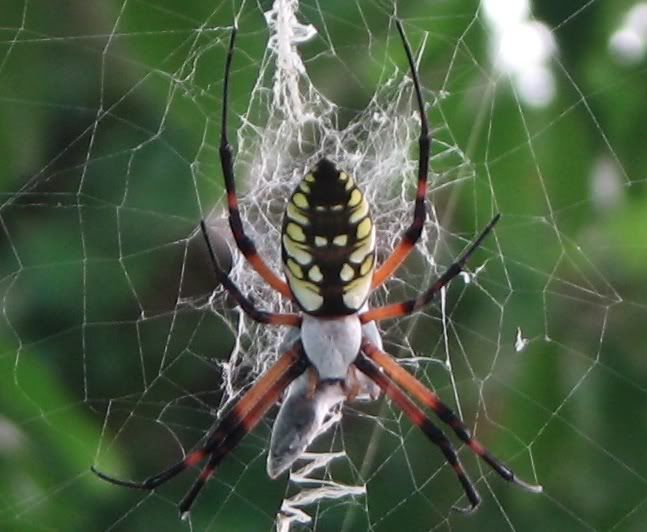
At a rest area along the way in Georgia, we stopped for lunch and found this huge gardner spider in the trees. I've never seen a gardner spider this big, it had to be around 3 inches long.


Here's a photo of my grandmas' eggplant growing nicely from a topsy turvey.


While visiting one of the grandparents in Indiana, a stray kitten came running to us wanting all sorts of attention. My sister (who is a sucker for homeless cats lol) brought it home with her of course. For being an outdoor cat, the kitten was litter trained quickly and slept most of the way home in the car. The kitten was appropriately named Indy.

Vacation time soon - Quick update

I will be leaving on vacation in a couple days from July 22 - July 30, going to Indiana to pickup my son and visit family. In the meantime, I'm trying to finish up my remaining Monarchs, there are 12 chrysalis left. I purchased a 24" high net castle enclosure from LiveMonarch.org, a not-for-profit foundation in Florida. They also have a professional sanitizing spray that actively kills all bacteria, mold, mildew, single cell organisms, and even viruses. If your ready to raise a bunch of caterpillars, these are essential products to own.

Here are some interesting resources about rearing Monarchs:

Live Monarch - Free Milkweed Seed / Rearing Supplies
http://www.livemonarch.org/

Monarch Watch - Forum and Online Store
http://www.monarchwatch.org/

Monarch Butterfly Migration Tracking Project
http://www.learner.org/jnorth/monarch/

Gardenweb Butterfly Garden Message Board
http://forums.gardenweb.com/forums/butterfly/

Tobacco Hornworms on Nicotiana

We have two Nicotiana plants, also known as flowering tobacco, being raided by the tobacco hornworm. Want to know how to tell the difference between a Tobacco Hornworm and Tomato Hornworm?

The tobacco hornworm is generally green with seven diagonal white lines on the sides and a curved red horn. The tomato hornworms have eight V-shaped marks on each side and their horn is straighter and blue-black in color. These hornworms are the larvae of hawk or sphinx moths.

The plants were cutback today to promote new growth and I'll probably spray later this evening with Southern Agriculture Thuricide, a product that contains Bacillus thuringiensis (BT). I used BT a month ago and with one treatment it worked very well to get rid of the caterpillars. The trick is to spray in the evening because BT degrades quickly in sunlight.